Millet vs Rice: Which One Should You Choose for a Healthier Lifestyle?
For generations, rice has been a staple food in many households across India and around the world. However, with the growing awareness of healthy eating and sustainable agriculture, millets are making a strong comeback. Once considered traditional grains, millets are now recognized as a modern superfood due to their impressive nutritional profile and numerous health benefits.
But how do millets compare to rice? Which one is healthier? Let’s explore the complete nutritional comparison.
What Are Millets?
Millets are small-seeded cereal grains that have been cultivated for thousands of years. They are naturally gluten-free, rich in nutrients, and require significantly less water to grow compared to rice and wheat.
Popular varieties include:
- Finger Millet (Ragi)
- Pearl Millet (Bajra)
- Foxtail Millet
- Little Millet
- Barnyard Millet
- Kodo Millet
- Proso Millet
Each variety offers unique health benefits while sharing many nutritional advantages.
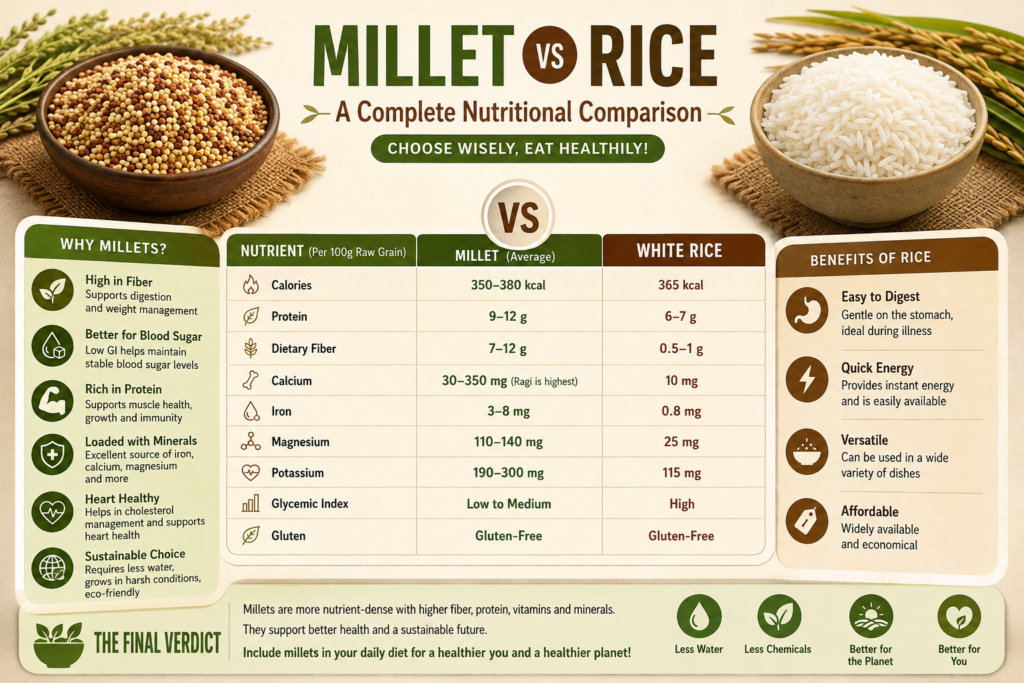
Nutritional Comparison (Per 100g Raw Grain)
| Nutrient | Millets (Average) | White Rice |
|---|---|---|
| Calories | 350–380 kcal | 365 kcal |
| Protein | 9–12 g | 6–7 g |
| Dietary Fiber | 7–12 g | 0.5–1 g |
| Calcium | 30–350 mg (Ragi is highest) | 10 mg |
| Iron | 3–8 mg | 0.8 mg |
| Magnesium | 110–140 mg | 25 mg |
| Potassium | 190–300 mg | 115 mg |
| Glycemic Index | Low to Medium | High |
| Gluten | Gluten-Free | Gluten-Free |
1. Higher Fiber Content
One of the biggest advantages of millets is their high dietary fiber.
Fiber helps:
- Improve digestion
- Prevent constipation
- Keep you full for longer
- Reduce unhealthy snacking
- Support weight management
White rice, especially polished rice, contains very little fiber because the outer bran layer is removed during processing.
Winner: ✅ Millets
2. Better for Blood Sugar Control
Millets generally have a lower Glycemic Index (GI), meaning they release glucose slowly into the bloodstream.
Benefits include:
- Stable blood sugar levels
- Reduced insulin spikes
- Better energy throughout the day
- Suitable for people with diabetes (when consumed in balanced portions)
White rice has a higher GI, which may cause rapid increases in blood sugar after meals.
Winner: ✅ Millets
3. Richer in Protein
Protein is essential for:
- Muscle repair
- Healthy skin and hair
- Immune function
- Growth and development
Most millet varieties provide more protein than white rice, making them an excellent choice for vegetarians and active individuals.
Winner: ✅ Millets
4. Loaded with Essential Minerals
Millets are naturally rich in important minerals such as:
- Iron
- Magnesium
- Phosphorus
- Potassium
- Zinc
Finger Millet (Ragi) is particularly famous for its exceptionally high calcium content, making it beneficial for children, women, and older adults.
White rice contains significantly fewer minerals due to refining.
Winner: ✅ Millets
5. Supports Heart Health
Millets contain healthy plant compounds, fiber, and magnesium that may help support cardiovascular health.
Regular consumption may contribute to:
- Better cholesterol management
- Improved blood pressure
- Reduced risk of heart disease
- Healthier blood circulation
White rice offers energy but fewer heart-supportive nutrients.
Winner: ✅ Millets
6. Ideal for Weight Management
If you’re trying to lose weight or maintain a healthy weight, millets can be a smarter choice.
Their high fiber and protein content help:
- Increase satiety
- Reduce hunger cravings
- Support better portion control
- Provide sustained energy
Rice digests more quickly, which may leave you feeling hungry sooner.
Winner: ✅ Millets
7. Digestive Health Benefits
Millets promote a healthy digestive system by supporting beneficial gut bacteria and improving bowel regularity.
Their fiber content also helps reduce digestive discomfort and supports long-term gut health.
White rice is easier to digest during illness but does not provide the same digestive benefits for daily consumption.
Winner: ✅ Millets
8. Environmental Sustainability
Millets are not only healthier for people—they are also better for the planet.
Compared to rice, millets:
- Require much less water
- Grow well in dry climates
- Need fewer chemical fertilizers
- Are naturally resilient to harsh weather conditions
- Help support sustainable farming
Choosing millets contributes to a more environmentally friendly food system.
Winner: ✅ Millets
Are There Any Benefits of Rice?
Absolutely. Rice still has its place in a balanced diet.
Rice is:
- Easy to digest
- A quick source of energy
- Widely available and affordable
- Suitable during illness or recovery
- Versatile for a wide range of dishes
The healthiest approach is to consume rice in moderation while incorporating nutrient-rich grains like millets into your weekly meals.
Easy Ways to Replace Rice with Millets
You don’t need to switch overnight. Start gradually by replacing a few meals each week.
Try:
- Millet upma for breakfast
- Millet pulao instead of rice
- Ragi dosa or idli
- Foxtail millet khichdi
- Millet salads
- Millet porridge
- Millet biryani
- Millet flour for rotis
These dishes offer familiar flavors with added nutritional benefits.
Who Should Eat More Millets?
Millets are an excellent choice for:
- Individuals managing diabetes
- People aiming for weight loss
- Children and teenagers
- Pregnant and breastfeeding women
- Older adults
- Fitness enthusiasts
- Vegetarians and vegans
- Anyone seeking a healthier, more balanced diet
As with any grain, portion size and dietary variety remain important.
Final Verdict
When comparing Millets vs Rice, millets emerge as the more nutrient-dense option. They provide higher amounts of fiber, protein, vitamins, and minerals while supporting better blood sugar control, digestive health, heart health, and sustainable farming practices.
Rice remains a valuable staple food and can be part of a balanced diet. However, replacing some rice-based meals with millets is a simple and effective way to improve overall nutrition and embrace healthier eating habits.
Small dietary changes can make a lasting impact. By including millets in your daily meals, you’re investing not only in your health but also in a more sustainable future.
Start your journey toward healthier living—one bowl of millet at a time!