Introduction
As the world faces growing challenges such as climate change, water scarcity, soil degradation, and increasing food demand, the need for sustainable agricultural practices has never been greater. Among the many crops that can help address these challenges, millets stand out as one of the most promising solutions.
Often referred to as “smart grains,” millets have been cultivated for thousands of years and are now gaining global recognition for their nutritional value, resilience, and environmental benefits. These ancient grains require fewer resources to grow while providing excellent nutrition, making them a powerful ally in building a sustainable future.
What Are Millets?
Millets are a group of small-seeded cereal grains that have been cultivated across Asia and Africa for centuries. They are naturally rich in nutrients and can thrive in challenging environmental conditions where many other crops struggle.
Some of the most popular millet varieties include:
- Ragi (Finger Millet)
- Pearl Millet (Bajra)
- Foxtail Millet
- Little Millet
- Kodo Millet
- Barnyard Millet
- Proso Millet
- Sorghum (Jowar)
These grains are versatile, nutritious, and suitable for a wide range of culinary applications.
The Need for Sustainable Farming
Modern agriculture has significantly increased food production, but it has also contributed to several environmental issues, including:
- Excessive water consumption
- Soil degradation
- Loss of biodiversity
- Greenhouse gas emissions
- Heavy dependence on chemical fertilizers and pesticides
Sustainable farming focuses on producing food while conserving natural resources, protecting ecosystems, and ensuring long-term agricultural productivity. Millets fit perfectly into this vision.
Why Millets Are the Future of Sustainable Farming
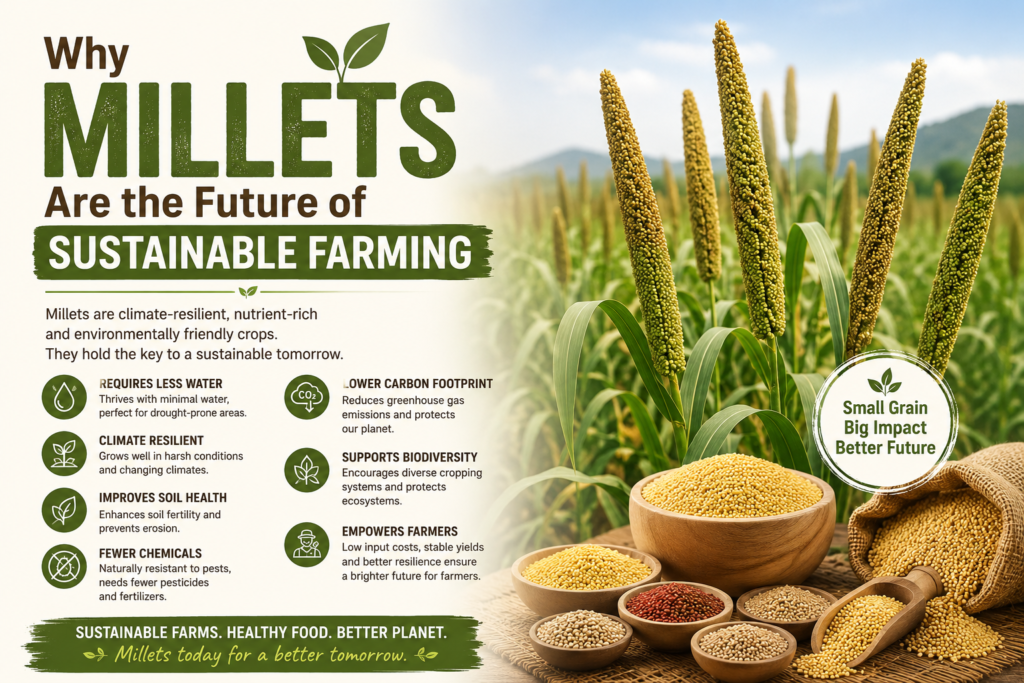
1. Require Less Water
One of the biggest advantages of millets is their low water requirement. Compared to crops like rice, which demand large amounts of irrigation, millets can grow successfully with significantly less water.
This makes them ideal for regions experiencing droughts or water shortages.
Benefits:
- Conserves groundwater
- Reduces irrigation costs
- Supports farming in dry regions
2. Thrive in Harsh Climate Conditions
Millets are naturally resilient crops. They can withstand:
- High temperatures
- Drought conditions
- Poor soil fertility
- Irregular rainfall
As climate change leads to more unpredictable weather patterns, millet cultivation provides farmers with a reliable and climate-resilient crop.
3. Improve Soil Health
Millets have deep root systems that help maintain soil structure and reduce erosion. They also contribute organic matter back into the soil, improving fertility over time.
Growing millets as part of crop rotation can:
- Enhance soil biodiversity
- Reduce nutrient depletion
- Promote healthier farmland
4. Require Fewer Chemical Inputs
Millets are naturally hardy and generally less susceptible to pests and diseases compared to many commercial crops. As a result, they often require fewer pesticides and chemical fertilizers.
This helps:
- Reduce environmental pollution
- Lower production costs
- Promote healthier ecosystems
5. Lower Carbon Footprint
Because millet farming requires less irrigation, fertilizer, and intensive machinery, it generates fewer greenhouse gas emissions than many conventional crops.
Choosing millet-based agriculture contributes to reducing agriculture’s environmental impact and supports climate action.
6. Support Biodiversity
Large-scale monoculture farming can reduce biodiversity and increase vulnerability to pests and diseases. Millets encourage crop diversification, making agricultural systems more resilient.
Growing multiple millet varieties helps:
- Preserve traditional farming practices
- Protect native seed varieties
- Support healthier ecosystems
7. Increase Farmer Resilience
For small-scale farmers, millets provide a dependable source of income because they perform well even in difficult growing conditions.
Benefits include:
- Reduced crop failure risk
- Lower cultivation costs
- More stable yields during uncertain weather
This resilience is particularly valuable in regions affected by climate variability.
Millets and Food Security
Global food security depends on producing nutritious food while adapting to changing environmental conditions.
Millets play an important role by offering:
- Reliable harvests
- Long storage life
- High nutritional value
- Adaptability to diverse climates
These characteristics make them an important crop for ensuring food availability in the future.
Nutritional Benefits of Millets
Millets are often called nutri-cereals because they are naturally rich in essential nutrients.
They provide:
- Dietary fiber
- Plant-based protein
- Iron
- Calcium
- Magnesium
- Potassium
- Phosphorus
- Antioxidants
- B vitamins
Many millet varieties are also naturally gluten-free, making them suitable for people with gluten intolerance or those seeking alternative grains.
Popular Millet-Based Foods
Millets can be used to prepare a wide variety of healthy meals, including:
- Millet Flour
- Roti
- Dosa
- Idli
- Porridge
- Upma
- Khichdi
- Breakfast cereals
- Cookies
- Energy bars
- Pasta
- Noodles
- Pancakes
- Smoothies
Their versatility makes it easy to include them in everyday diets.
Economic Benefits of Millet Farming
Millet cultivation benefits not only the environment but also rural economies.
Advantages include:
- Lower farming costs
- Reduced dependence on irrigation
- Better climate resilience
- New market opportunities through health-conscious consumers
- Support for organic and sustainable agriculture
As awareness of healthy eating grows, demand for millet-based products continues to increase, creating additional income opportunities for farmers and food businesses.
The Growing Global Interest in Millets
Governments, agricultural organizations, and nutrition experts worldwide are encouraging millet cultivation and consumption.
The growing popularity of plant-based diets, sustainable food systems, and climate-smart agriculture has positioned millets as one of the most important crops for the future.
Consumers are increasingly choosing millet products for their health benefits, while farmers appreciate their resilience and low production costs.
How Consumers Can Support Sustainable Farming
Every food choice has an environmental impact. Consumers can contribute to sustainable agriculture by:
- Choosing millet-based products regularly
- Supporting local farmers
- Buying organically grown millets when available
- Reducing food waste
- Exploring traditional millet recipes
Small lifestyle changes can collectively make a significant difference for both the environment and farming communities.
Conclusion
Millets are more than ancient grains—they represent the future of sustainable agriculture. Their ability to thrive with minimal water, withstand harsh climates, improve soil health, and provide exceptional nutrition makes them one of the most environmentally friendly crops available today.
As the world seeks solutions to climate change, food insecurity, and resource conservation, millets offer a practical path toward a healthier planet and healthier communities. By embracing millet cultivation and incorporating these nutrient-rich grains into our daily diets, we can support farmers, protect natural resources, and build a more sustainable food system for generations to come.
Choosing millets is not just a healthy decision—it’s a commitment to a greener, more resilient future.